The source of Honour
Honour
One of the recurring themes through islamic history is is the relationship between Islam and honour. Muslims have at different points in history possessed political power, military strength, economic wealth, intellectual influence and cultural sophistication on a scale that few civilisations could rival. Yet Muslim history also contains repeated examples of states becoming divided, politically dependent, militarily weakened and eventually conquered. A situation that we are not unfamiliar to, today.
You could very easily try explain these periods entirely through the lens of military, economic or political factors. The fall of a state is rarely caused by one event or one decision. However, the Quran gives Muslims a broader framework through which to understand both strength and weakness.
Allah ﷻ says:
"Whoever seeks honour and power, then ˹let them know that˺ all honour and power belongs to Allah." -35:10
and:
"But all honour and power belongs to Allah, His Messenger, and the believers, yet the hypocrites do not know." - 63:8
Izzah encompasses strength, dignity, might and the ability to exercise authority rather than live in a state of humiliation and subservience.
The Quran does not condemn Muslims for wanting strength. Rather, it teaches them where their honour ultimately comes from.
A Muslim can seek political power, wealth, knowledge, military strength and civilisation. None of these are inherently blameworthy. The problem arises when Muslims begin to believe that these things themselves are the source of their honour, or when they pursue them through means that contradict the commands of Allah.
The result is a fundamental inversion. Instead of using worldly means while remaining dependent upon Allah, Muslims begin to compromise the principles of Islam in pursuit of those means. They begin to believe that political power requires abandoning certain Islamic principles, that international respect requires adopting the values of other civilisations, or that unity requires compromising revelation.
Al-Andalus
The history of al-Andalus provides a particularly important case study of this problem.
The Muslim conquest of much of the Iberian Peninsula began in 711 CE. Muslim political authority subsequently developed through several stages, eventually producing the Umayyad Emirate and, in 929 CE under Abdul Rahman III, the Umayyad Caliphate of Córdoba.
Over the following decades, al-Andalus became one of the major centres of the medieval world.
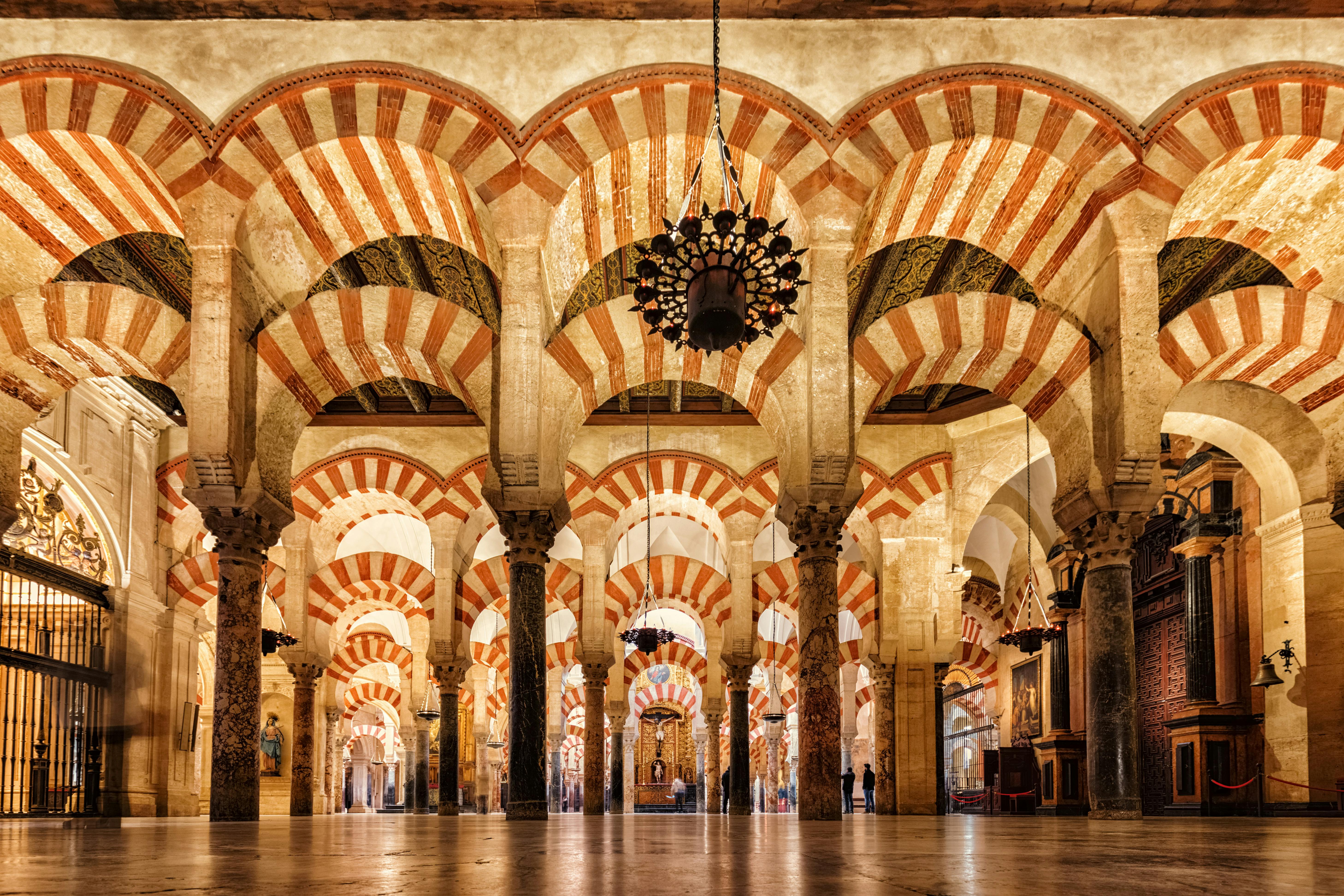
Córdoba developed into a major political, economic and intellectual centre. Under the Umayyads, monumental architecture was constructed, scholarship was patronised and institutions of learning developed. The Great Mosque of Córdoba became one of the most important monuments of Islamic civilisation.
Under alHakam II, the patronage of scholarship expanded considerably. Books were collected from across the Islamic world, scholars were patronised and intellectual life flourished.
The result was a civilisation that became famous for its scholarship in medicine, astronomy, mathematics, philosophy, literature and other fields.
But it is important to understand the order in which these things developed. Islam came first.
The political and economic structures that allowed Andalusian civilisation to flourish developed within a Muslim society. The institutions of learning, architecture and intellectual production were products of that civilisation; they were not the original source of its honour.
This distinction matters because it is possible for a civilisation to become attached to the fruits of its success while becoming increasingly detached from the foundations upon which those fruits depend.
The Umayyad Caliphate of Córdoba eventually entered a period of civil conflict known as the Fitna of al-Andalus, beginning in 1009. The conflict involved competing factions and rival claims to political authority, and the caliphate eventually collapsed in 1031.
The collapse did not result in the immediate disappearance of Andalusian civilisation.
Instead, the territory fragmented into numerous independent Muslim kingdoms known as the Taifas.
The eleventh century remained a period of considerable cultural and intellectual achievement. Rival courts competed for poets, scholars and intellectuals. Architecture continued to develop. Rulers patronised literature and learning. At the same time, political authority was fragmented.
Andalus did not become uncivilised before it became politically weak. In many respects, its cultural sophistication continued even as its political unity disappeared. The Taifa rulers had their own courts, armies, administrations and political interests. Their competition could involve the patronage of scholars and poets, the construction of monumental buildings and the cultivation of royal prestige. Architecture and literature were therefore not themselves the problem. They were legitimate areas of achievement. The problem was that the political environment increasingly encouraged rulers to compete with one another for prestige and survival rather than operating within a unified political order.
Modern scholarship on the Taifa period has emphasised the relationship between political legitimacy, court culture and competition. Rival rulers used architecture, literature, coinage and other forms of representation to establish and communicate their authority.
The distinction is not between Islamic civilisation and architecture. It is between the pursuit of legitimate achievement within a sound foundation and the pursuit of prestige and political survival as ends in themselves.
The Quran provides a relevant principle.
"Obey Allah and His Messenger and do not dispute with one another, or you would be discouraged and weakened. Persevere! Surely Allah is with those who persevere." - 8:46
The verse was of course not revealed about Andalus, and it would incorrect to present it as the sole explanation to why Andalusian states fell. However it establishes a general principle concerning internal conflict and collective strength.
The Taifa period provides a historical example of the consequences that political fragmentation can have.
Instead of one major Muslim political authority controlling al-Andalus, there were numerous competing states.
Taifa rulers fought one another for territory and political influence. Some sought external assistance against rival Muslim rulers. Christian kingdoms in the north increasingly exploited these divisions and developed systems of tribute and political pressure against the Taifa states. The parias became an important feature of this period, with Muslim rulers making substantial payments to Christian powers in return for peace, protection or the cessation of military pressure.
The political situation could therefore develop into a cycle in which the preservation of one ruler's territory required increasing military and financial resources. Those resources placed further pressure upon the state, while attempts to deal with rivals could lead rulers to seek alliances with external powers. Those external powers could then increase their own leverage over the Muslim states.
Their political independence and collective strength became increasingly compromised.
A ruler may genuinely believe that he is acting pragmatically. He may believe that an alliance will preserve his kingdom. He may believe that paying tribute will prevent a worse outcome. He may believe that compromising one principle will allow him to preserve ten others.
But once the preservation of one's political position becomes the overriding objective, the danger is that obedience to Allah becomes subordinate to political necessity.
The question changes from:
“What does Allah require from us?”
to:
“What must we do to survive?”
That is where seeking honour through other than Allah can begin to manifest itself.
The consequences of this fragmentation became increasingly visible during the eleventh century.
In 1085, Toledo fell to Alfonso VI of León and Castile. This was a major strategic loss for the Muslims and demonstrated the increasing pressure placed upon the Taifa states. The remaining rulers faced a serious dilemma. They could continue competing among themselves, or they could appeal for assistance from the Almoravid ruler Yusuf ibn Tashfin in North Africa.
The Taifa rulers eventually sought Almoravid intervention. In 1086, Yusuf ibn Tashfin crossed into Iberia and defeated Alfonso VI's forces at the Battle of al-Zallaqah, known in European sources as Sagrajas. The battle demonstrated that the military situation was not predetermined. Muslim military power could still achieve major victories when forces were consolidated. But the political fragmentation remained. The Almoravids eventually intervened more directly in Andalusian politics and incorporated much of al-Andalus into their North African empire. This is significant because the Taifa rulers had sought external assistance in order to address the military and political pressures facing them, but the intervention ultimately brought an end to their independent rule.
The rulers who had sought to preserve their kingdoms eventually lost their political independence.
This should not be turned into a simplistic claim that Allah directly caused the fall of a particular ruler because of a particular sin. Only Allah knows the unseen reasons behind individual events.
But as a broader historical lesson, it illustrates an important principle:
Worldly power cannot guarantee itself.
A ruler can possess a kingdom and still lose it.
A civilisation can possess wealth and still become dependent.
A political leader can pursue every available means of preserving his position and still find that the position disappears.
Allah ﷻsays:
“Say: O Allah, Owner of Sovereignty, You give sovereignty to whom You will and You take sovereignty away from whom You will. You honour whom You will and You humble whom You will.” -3:26
Benefitting from others.
At this point, an important objection must be addressed. If the Taifa rulers' dependence upon external powers is part of the lesson, does this mean that Muslims should never seek assistance from non-Muslims? Does it mean that Muslims cannot learn from other civilisations or adopt useful technologies, administrative systems or military techniques developed elsewhere?
No.
Islamic history itself demonstrates otherwise. Muslims throughout history learned from other civilisations. They translated works, adopted technologies and developed systems of administration through interaction with Persians, Byzantines, Indians and others. The Prophet ﷺ himself took worldly means available to him. Seeking a useful means from another people is not, in itself, a rejection of Islam.
The issue is therefore not where a means comes from. The issue is whether the means is permissible, and whether Muslims begin treating it as the source of their honour or as a standard that revelation itself must conform to. There is a fundamental difference between recognising that another civilisation has developed something beneficial and believing that its success requires Muslims to adopt principles that contradict revelation. A Muslim can learn from another people without believing that their worldview is superior. He can use their technology without adopting their values. He can cooperate with them without making their approval the measure of his own dignity.
The same problem exists today, although its form is different. Muslim politicians, activists and organisations often have legitimate objectives. They may want to improve the condition of Muslims, protect Muslim communities, achieve political influence, establish stability, improve education and economic conditions, or increase Muslim representation. None of these objectives are inherently wrong.
The danger begins when Muslims conclude that Islam itself must be compromised in order to achieve them.
A politician may believe that openly defending an Islamic principle will make him unelectable. An activist may believe that certain Islamic positions must be hidden because they are unpopular. A Muslim government may believe that adopting the political or moral assumptions of a more powerful civilisation is necessary to obtain international recognition. A Muslim organisation may believe that certain Islamic principles must be softened because otherwise it will lose donors, partnerships or political influence.
The argument is often presented as pragmatism.
But pragmatism cannot mean treating Allah's commands as negotiable whenever obedience becomes inconvenient.
"who choose disbelievers as allies instead of the believers. Do they seek honour and power through that company? Surely all honour and power belongs to Allah." -4:139
The verse does not prohibit every form of cooperation or interaction with non Muslims. Rather, it warns against seeking honour, strength and standing through them in a manner that displaces Allah as the true source of dignity and allegiance.
A Muslim should therefore be able to distinguish between using a system and submitting to its assumptions. There may be circumstances in which participation, cooperation or the use of existing institutions serves a legitimate Islamic objective. But there is a serious difference between using a worldly system as a means and believing that Islam must be reshaped to satisfy the standards of that system.
The danger arises when Muslims begin with the assumption that because a particular civilisation is materially powerful, its political and moral assumptions must also be superior.
This reverses the correct relationship between Islam and the world.
The Muslim's starting point is not:
“What does the dominant civilisation consider acceptable?”
It is:
“What has Allah revealed?”
After establishing that, the Muslim can determine which worldly means are beneficial, which are permissible, which require adaptation and which must be rejected.
The late Ottomans
The late Ottoman period offers a smaller, more modern example of the same principle, although it deserves a lighter touch than Andalus, since the causes of Ottoman decline were far more numerous and contested among historians.
From the eighteenth and especially nineteenth centuries, Ottoman rulers faced military and economic pressure from European powers, and responded with major reforms. The Tanzimat, beginning in 1839, restructured Ottoman law and administration, centralised state power, and modernised the military, much of it a reasonable response to real weaknesses, no different in principle from any state strengthening itself against external pressure.
But among the reformers and critics of the period, a further argument took place, that the empire's weakness was not only in its military or administrative capacity but in its Islamic legal and political foundations. On that view, reform stopped being about the means by which an Islamic state governed, and became a question of whether the principles themselves needed replacing, whether European approval and European models had become the standard by which the empire's legitimacy would be judged.
What matters here is the shift in question it represents: from:
"how do we strengthen the state within our foundations"
to:
"do our foundations need to be abandoned for the state to be respected."
Where Honour comes from
Umar ibn al Khattab رضي الله عنه reportedly said “We were a people of humiliation, and Allah honoured us through Islam. Whenever we seek honour through other than that with which Allah honoured us, Allah will humiliate us.”
The Muslims dignity was not ultimately derived from military strength, political authority or worldly achievement. They were honoured through Islam.
And once Muslims possessed Islam, they were able to build political institutions, develop scholarship, establish cities, conduct trade, develop military capabilities and produce civilisation.
The order in which this occurred is extremely important.
Islam was the foundation upon which Muslim civilisation developed.
his distinction can be applied across Muslim life.
There is nothing wrong with seeking wealth, but wealth cannot become the source of dignity. There is nothing wrong with seeking political power, but political power cannot become the source of legitimacy. There is nothing wrong with pursuing education, but intellectual prestige cannot become the measure of worth. There is nothing wrong with building beautiful cities, but architecture cannot become a substitute for righteousness. There is nothing wrong with learning from other nations, but their approval cannot become the standard by which Islam is judged.
The believer uses the means while knowing that Allah controls the outcome.
The Prophet ﷺ planned his migration. He took precautions, sought companions, concealed his route and used the means available to him. Tawakkul is therefore not passivity. It is using the means while knowing that the means themselves do not independently control the outcome.
This is the balance Muslims are required to maintain. They should build, organise, learn, develop and pursue strength. But none of these things should become objects of dependence or standards that override revelation.
The history of al-Andalus therefore needs to be understood carefully.
Its decline cannot be reduced to one sin, one ruler or one cultural development. The collapse of the Córdoba Caliphate resulted from a complex combination of civil conflict, political instability, competing claims to authority and other structural factors. The subsequent history was shaped by Taifa fragmentation, Christian military and political expansion, changing alliances, fiscal pressures and repeated interventions from North African powers.
The later defeats at Las Navas de Tolosa in 1212 and the subsequent Christian conquests dramatically reduced Muslim territory. Córdoba fell in 1236, Seville in 1248, and Muslim political authority eventually became confined largely to the Nasrid kingdom of Granada. Granada survived for more than two centuries, navigating between stronger Christian kingdoms and North African powers, before the Nasrid kingdom surrendered in 1492.
The point is not that Muslims built too many beautiful buildings.
The point is that beautiful buildings cannot compensate for political weakness, internal division and most importnaly disobedience to Allah.
The Great Mosque of Córdoba could not preserve the Caliphate.
The libraries could not preserve political unity.
The poets could not stop the advance of armies.
None of this means that scholarship, architecture or literature caused the decline of al-Andalus. Rather, it demonstrates that the visible achievements of a civilisation can survive even while the political conditions supporting its strength deteriorate.
This is one of the most important lessons to take from al-Andalus. A civilisation can be culturally magnificent and politically vulnerable at the same time. It can produce extraordinary scholars while its rulers compete against one another. It can build monuments that survive for centuries while the political authority that constructed them disappears within decades.
The existence of worldly achievement therefore cannot, by itself, tell us whether a civilisation is truly succeeding.
The central question is not how Muslims can become powerful. It is what kind of power Muslims should seek, and for whose sake that power should be pursued.
Islam does not call Muslims to abandon the world. It calls them to put the world in its proper place. Muslims should build institutions, acquire knowledge, develop their economies, strengthen their communities and pursue political influence. There is no contradiction between Islam and strength. The contradiction arises when strength becomes more important than obedience, when political survival becomes more important than principle, or when the approval of creation becomes more important than the pleasure of the Creator.
Muslims may use whatever permissible means Allah has placed within their reach. They may learn from other civilisations, adopt useful technologies, develop institutions and engage with the political realities of their time. But none of these means can become the standard by which revelation itself is judged. The question is not simply whether something will make Muslims stronger, but whether it can make them stronger without requiring them to abandon what Allah has commanded.
The same principle applies to unity. Unity is a source of strength, and Allah commands the believers to hold firmly together and not become divided. But unity cannot be treated as an end for which every principle may be sacrificed. The objective is not simply to unite Muslims at any cost, but to unite them upon the truth.
Likewise, political legitimacy, international recognition and worldly influence can never become ends that justify disobedience to Allah. There will always be circumstances in which obedience appears politically inconvenient and compromise appears to offer an easier path to acceptance or stability. Yet if Muslims eventually come to regard Islam itself as the obstacle standing between them and success, then the means have overtaken the objective.
The same principle extends beyond states and civilisations. It applies whenever a Muslim begins to measure his worth according to something other than Allah: the politician who compromises his principles for power, the individual who compromises his religion for social acceptance, or the community that abandons what it believes to be true because it fears criticism. Each is confronted by the same fundamental question: where do we believe honour comes from?
The answer cannot change according to circumstance.
When Muslims are weak, honour still belongs to Allah.
When Muslims are powerful, honour still belongs to Allah.
When the world praises Muslims, honour still belongs to Allah.
When the world condemns them, honour still belongs to Allah.
The objective, then, should not be to recover some romanticised version of Muslim greatness for its own sake. The objective should be to seek the pleasure of Allah and to build whatever strength, knowledge, wealth and institutions can serve that purpose. If worldly strength comes with obedience, then it is a blessing. If political influence comes with obedience, then it is a responsibility. If wealth and knowledge come with obedience, then they are means through which good can be achieved.
But if acquiring them requires Muslims to place something above revelation, then the very thing they hoped would honour them may become the thing through which they compromise their honour.
The lesson is not that Muslims should stop seeking strength. It is that they must never mistake strength for the source of their dignity. They should use the means available to them while placing their reliance upon Allah. They should pursue influence without making influence their master, seek unity without sacrificing the truth, and build civilisation without allowing its achievements to replace the foundation upon which it was built.
For Allah is the One who gives sovereignty and takes it away. He is the One who honours and humbles. And if all honour belongs to Him, then the greatest mistake a Muslim civilisation, or a Muslim can make is to seek from creation what can only ultimately be given by the Creator.
More from Lamak Hussain
Comments
No comments yet. Be the first to share your thoughts.